February 23, 2012

Andalas’s journey

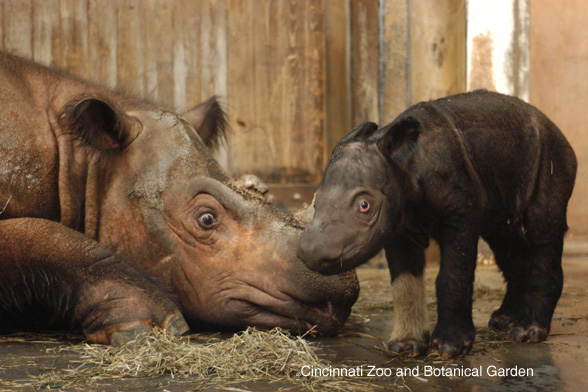
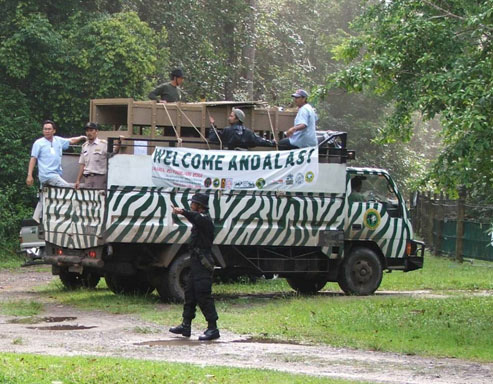
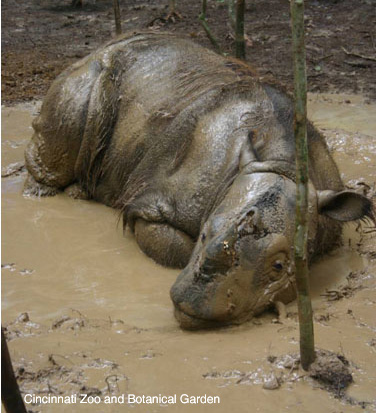
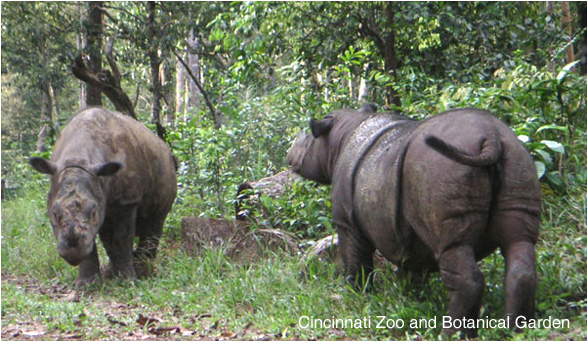
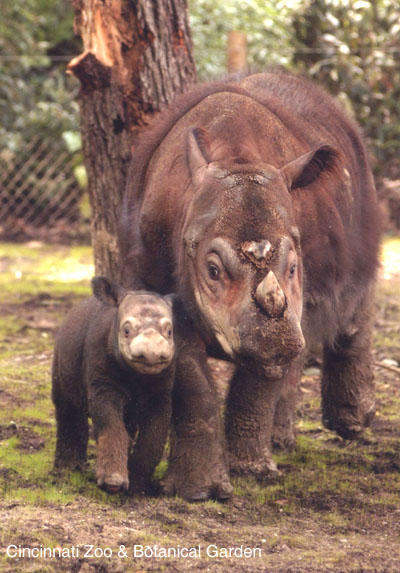
Almost a decade ago, Andalas’s birth at the Cincinnati Zoo was cause for much celebration. It offered hope that individuals in captivity could help to replenish the numbers of this critically endangered species. Since then, Andalas has gone from strength to strength. In 2007, it was time at last to return to Sumatra to do what comes naturally. After an arduous journey, Andalas was home in his native habitat. This photo gallery and video captures moments from his journey over the past ten years.
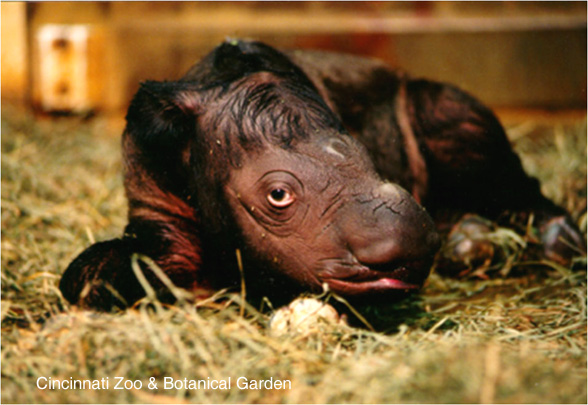
As part of the Sumatran Rhino Sanctuary’s captive breeding program, Andalas (the 7-year-old male Sumatran rhino born at the Cincinnati Zoo and transferred to Indonesia in 2007) is being exposed to as many of the sanctuary’s female rhinos as possible so he learns to communicate with the females long before they are put together for breeding purposes. This socialization process is being facilitated by feeding the rhinos their daily diets through the fence at the central breeding area, and then opening the gate so the rhinos can interact with each other if they choose. Over the past several months, Andalas has routinely been introduced to all three of the Sanctuarys females: Bina, Ratu and Rosa. This video shows an introduction between Andalas and Ratu – chasing and fighting are actually part of normal rhino “courting rituals.” Soon after this video was shot, Andalas mated with Ratu for the first time.

Video from the International Rhino Foundation.

YouTube Preview Image

CREW – Saving species with science

The Center for Conservation and Research of Endangered Wildife (CREW) which is based at the Cincinnati Zoo and Botanical Gardens is playing a central role in the mission to prevent the extinction of the Sumatran rhino.

Emi became an icon of rhino conservation when she became the first rhino to give birth in captivity in over 100 years. She gave birth to three calves before she passed away in 2009.

Through their research, CREW scientists have become world experts on the reproductive physiology of Sumatran rhinos. In an effort to increase animal numbers and improve genetic diversity, CREW uses science and technology to achieve numerous reproductive breakthroughs in these highly endangered Asian rhinos.

The Sumatran rhinoceros is one of the most endangered animals on earth with fewer than 270 individuals distributed throughout fragmented rainforests of South East Asia. A captive breeding program was formally established for this species in 1984, but efforts to propagate these rhinos in captivity failed.

In 1997, CREW scientists initiated research using endocrinology and ultrasonography to learn about the reproductive physiology of the species. As a result, scientific breakthroughs led to the first Sumatran rhino calf bred and born in captivity in 112 years at the Cincinnati Zoo on Sept. 13, 2001.

Since the birth of that first calf, two additional calves have been produced. This series of successful births clearly demonstrates how productive a captive breeding program can be when it incorporates good science, veterinary care, animal husbandry and intensive management. The Cincinnati Zoo remains the only place in the world breeding this species successfully in captivity.

In addition to its leadership role in the Sumatran rhino captive breeding program, CREW partners with other conservation organizations (Rhino Global Partnerships) to protect Sumatran rhinos in the wild by helping to support Rhino Protection Units (RPUs). These RPUs are trained to protect the rhinos from poachers, the greatest threat to the species. Furthermore, financial support and staff expertise are provided to facilitate the captive breeding program on Sumatra. The goal of the programme is to keep the rhinos safe in the wild and to establish a successful international captive breeding program for the Sumatran rhinoceros.

The return of a now adult Andalas to Sumatra in November 2007 was a significant and emotional milestone for the CREW team. It was the fruition of years of dedicated struggle marked as much by frustration and disappointment as by success and mini-miracles.

YouTube Preview Image

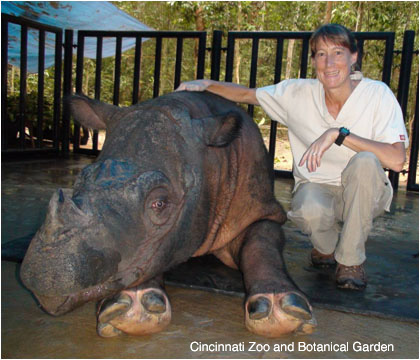
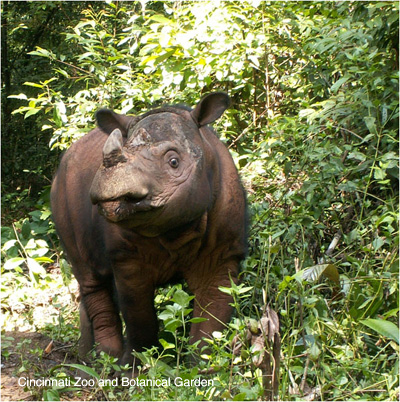
When Dr. Terri Roth, the Director of CREW visited the Cincinnati Zoo’s first-born Sumatran rhino calf, Andalas, in his new home at the Sumatran Rhino Sanctuary (SRS) on Sumatra, she was delighted to find a rhino that is thriving in his tropical homeland. Weighing in at 770 kg, Andalas is now the largest rhino at the reserve and is bigger than his father Ipuh (at the Cincinnati Zoo). Andalas’s neck has thickened, and his interest in the female rhinos has become apparent, suggesting he may soon be breeding.

Despite all of these changes, Andalas has maintained his childhood love of people and the attention they give him. He is the most well behaved rhino in the reserve for blood collection, foot exams, ultrasound exams and many other hands-on procedures that help the staff maintain his excellent health. Andalas has never been sick or seriously injured and he has adapted to the new forest environment, the change in diet and exposure to many new insects that he hadn’t encountered in the US, without a hitch. We can be reassured that Andalas is clearly benefiting from the outstanding care and wonderful home the Sumatran Rhino Sanctuary provides and await exciting news of successful matings and future offspring!

See how Andalas is adapting to his new home and caregivers in this video footage!

YouTube Preview Image

______________

Special thanks to the Cincinnati Zoo and Botanical Garden for the use of photos and videos